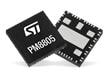

STEF05LAJR

STMicroelectronics
511-STEF05LAJR
STEF05LAJR

Produttore:

Descrizione:
Controller di tensione hot swap Electronic fuse for 5 V line

Ciclo di vita:
NRND:
Non consigliato per nuovi progetti.
Modello ECAD:
Scarica il Library Loader, uno strumento gratuito che consente di convertire questo file per il tuo strumento ECAD. Maggiori informazioni sul modello ECAD.

Disponibilità

A magazzino:
Non disponibile a magazzino
Tempo di consegna da parte della fabbrica:
Minimo: 5000   Multipli: 5000
Prezzo Unitario:
-,-- €
Prezzo esteso:
-,-- €
Stima Tariffa:
Per questo prodotto la spedizione è GRATUITA

Prezzi (EUR)

Qtà Prezzo Unitario
Prezzo esteso
Nastrati completa (ordinare in multipli di 5000)
0,459 € 2.295,00 €
0,438 € 4.380,00 €

Attributo del prodotto Valore dell'attributo Seleziona attributo
STMicroelectronics
Categoria prodotto: Controller di tensione hot swap
RoHS::  
Reel
Marchio: STMicroelectronics
Tipo di prodotto: Hot Swap Voltage Controllers
Serie: STEF05L
Quantità colli di fabbrica: 5000
Sottocategoria: PMIC - Power Management ICs
Prodotti trovati:
Per visualizzare prodotti simili, spunta almeno una casella di controllo
Seleziona almeno una casella di spunta qui sopra per visualizzare prodotti simili in questa categoria.
Attributi selezionati: 0

CNHTS:
8542390000
CAHTS:
8542390000
USHTS:
8542390090
MXHTS:
8542399901
ECCN:
EAR99

LM5060 High-Side Protection Controllers

Texas Instruments LM5060 High-Side Protection Controllers with Low Quiescent Current offers intelligent control of a high-side N-channel MOSFET during normal on/off transitions and fault conditions. The constant rise time of the output voltage results from the inrush current control. Both an Input UVLO (with hysteresis) and a programmable input OVP are provided, with an enable input offering a remote on or off control. The initial start-up VGS fault detection delay time, the transition VDS fault detection delay time, and the continuous over-current VDS fault detection delay time is programmed from a single capacitor. The MOSFET is latched off until either the enable input, or the UVLO input is toggled low and then high when a detected fault condition persists longer than the allowed fault delay time.