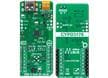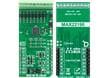

MIKROE-4644

Mikroe
932-MIKROE-4644
MIKROE-4644

Produttore:

Descrizione:
Strumenti di sviluppo interfaccia I2C to CAN Click

Disponibilità

A magazzino:
Non disponibile a magazzino
Tempo di consegna da parte della fabbrica:
10 settimane Tempo di produzione stimato in fabbrica.
Minimo: 1   Multipli: 1
Prezzo Unitario:
-,-- €
Prezzo esteso:
-,-- €
Stima Tariffa:

Prezzi (EUR)

Qtà Prezzo Unitario
Prezzo esteso
15,48 € 15,48 €

Attributo del prodotto Valore dell'attributo Seleziona attributo
Mikroe
Categoria prodotto: Strumenti di sviluppo interfaccia
RoHS::  
Add-On Boards
I2C to CAN
LT3960
Marchio: Mikroe
Tipo di interfaccia: I2C
Temperatura di lavoro massima: + 125 C
Temperatura di lavoro minima: - 40 C
Tensione di alimentazione di lavoro: 3.3 V, 5 V
Tipo di prodotto: Interface Development Tools
Quantità colli di fabbrica: 1
Sottocategoria: Development Tools
Prodotti trovati:
Per visualizzare prodotti simili, spunta almeno una casella di controllo
Seleziona almeno una casella di spunta qui sopra per visualizzare prodotti simili in questa categoria.
Attributi selezionati: 0

TARIC:
8517620000
USHTS:
8517620090
JPHTS:
851762090
ECCN:
EAR99

Human-Machine Interface Click Boards

Mikroe Human-Machine Interface adds interactive features to boards like capacitive sensing modules or speech recognition. Mikroe Click Boards are based around the mikroBUS™ interface standard and easily add incredible system capabilities. The devices are ideal for any applications that require interactive solutions like buttons, gestures, thumbwheels, etc. 

I2C to CAN Click

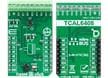
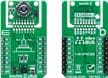
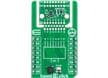
Mikroe I2C to CAN Click contains an I2C to CAN-physical transceiver to extend a single-master I2C bus through harsh or noisy environments. The board features the Analog Devices LT3960 robust high-speed transceiver that extends a single-master I2C bus up to 400kbps using the CAN-physical layer. One LT3960 from SCL and SDA I2C lines creates equivalent differential buses (CAN) on two twisted pairs. The second LT3960 recreates the I2C bus locally for any slave I2C devices on the other end of the twisted pairs. A built-in 3.3V LDO powers the I2C and CAN lines from a single input supply from 4V to 60V.