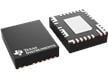

UCC3917N

595-UCC3917N
UCC3917N

Produttore:

Descrizione:
Controller di tensione hot swap Pos Floating Single Commercial Temp.

Ciclo di vita:
Obsoleto
Modello ECAD:
Scarica il Library Loader, uno strumento gratuito che consente di convertire questo file per il tuo strumento ECAD. Maggiori informazioni sul modello ECAD.
Attualmente Mouser non vende questo prodotto nella tua regione.

Disponibilità

A magazzino:

Attributo del prodotto Valore dell'attributo Seleziona attributo
Texas Instruments
Categoria prodotto: Controller di tensione hot swap
Limitazioni per la spedizione:
 Attualmente Mouser non vende questo prodotto nella tua regione.
RoHS::  
Controllers & Switches
15 V
1 Channel
11 mA
0 C
+ 70 C
Through Hole
PDIP-16
Tube
Marchio: Texas Instruments
Kit di sviluppo: UCC3917EVM
Tipo di prodotto: Hot Swap Voltage Controllers
Serie: UCC3917
Quantità colli di fabbrica: 25
Sottocategoria: PMIC - Power Management ICs
Peso unità: 1,054 g
Prodotti trovati:
Per visualizzare prodotti simili, spunta almeno una casella di controllo
Seleziona almeno una casella di spunta qui sopra per visualizzare prodotti simili in questa categoria.
Attributi selezionati: 0

TARIC:
8542399000
CNHTS:
8542319000
USHTS:
8542390090
JPHTS:
8542390990
MXHTS:
85423999
ECCN:
EAR99

LM5060 High-Side Protection Controllers

Texas Instruments LM5060 High-Side Protection Controllers with Low Quiescent Current offers intelligent control of a high-side N-channel MOSFET during normal on/off transitions and fault conditions. The constant rise time of the output voltage results from the inrush current control. Both an Input UVLO (with hysteresis) and a programmable input OVP are provided, with an enable input offering a remote on or off control. The initial start-up VGS fault detection delay time, the transition VDS fault detection delay time, and the continuous over-current VDS fault detection delay time is programmed from a single capacitor. The MOSFET is latched off until either the enable input, or the UVLO input is toggled low and then high when a detected fault condition persists longer than the allowed fault delay time.