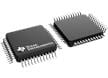

CD4066BE

Texas Instruments
595-CD4066BE
CD4066BE

Produttore:

Descrizione:
CI di commutazione analogica Quad

Modello ECAD:
Scarica il Library Loader, uno strumento gratuito che consente di convertire questo file per il tuo strumento ECAD. Maggiori informazioni sul modello ECAD.

A magazzino: 7.694

A magazzino:
7.694 Spedizione immediata
Tempo di consegna da parte della fabbrica:
6 settimane Tempo di produzione stimato in fabbrica per quantità superiori a quelle indicate.
Minimo: 1   Multipli: 1
Prezzo Unitario:
-,-- €
Prezzo esteso:
-,-- €
Stima Tariffa:

Prezzi (EUR)

Qtà Prezzo Unitario
Prezzo esteso
0,714 € 0,71 €
0,511 € 5,11 €
0,462 € 11,55 €
0,41 € 41,00 €
0,384 € 96,00 €
0,367 € 183,50 €
0,34 € 340,00 €
0,339 € 2.712,00 €

Attributo del prodotto Valore dell'attributo Seleziona attributo
Texas Instruments
Categoria prodotto: CI di commutazione analogica
RoHS::  
Through Hole
PDIP-14
4 Channel
4 x SPST
240 Ohms
3 V
18 V
+/- 5 V
+/- 10 V
30 ns
30 ns
- 55 C
+ 125 C
CD4066B
Tube
Marchio: Texas Instruments
Tipo di prodotto: Analog Switch ICs
Quantità colli di fabbrica: 25
Sottocategoria: Switch ICs
Corrente di alimentazione - Max: 5 uA
Tipo di alimentazione: Single Supply, Dual Supply
Peso unità: 1 g
Prodotti trovati:
Per visualizzare prodotti simili, spunta almeno una casella di controllo
Seleziona almeno una casella di spunta qui sopra per visualizzare prodotti simili in questa categoria.
Attributi selezionati: 0

Questa funzionalità richiede l'attivazione di JavaScript.

TARIC:
8542319000
CNHTS:
8542399000
CAHTS:
8542390000
USHTS:
8542390090
KRHTS:
8542311000
MXHTS:
8542399999
ECCN:
EAR99

CD4066B Quad Bilateral Switch

Texas Instruments CD4066B Quad Bilateral Switch is intended for transmitting or multiplexing analog or digital signals. The device is pin-for-pin compatible with the CD4016B but exhibits a much lower on-state resistance. The on-state resistance is also relatively constant over the full signal-input range. The CD4066B device consists of four bilateral switches with independent controls. Both the p and the n devices in a given switch are biased on or off simultaneously by the control signal. The well of the n-channel device on each switch is tied to either the input (when the switch is on) or to VSS (when the switch is off). This configuration eliminates the variation of the switch-transistor threshold voltage with an input signal and keeps the on-state resistance low over the full operating-signal range.